Veteran game designer Minh Le, best known as the co-creator of the legendary tactical shooter Counter-Strike, has pulled no punches in a recent interview, sounding off on the current state of the gaming industry. Le candidly described a landscape flooded with cash-grab titles, making it exponentially harder for truly innovative projects to cut through the noise. His remarks paint a sobering picture for any developer trying to make their mark in 2026.
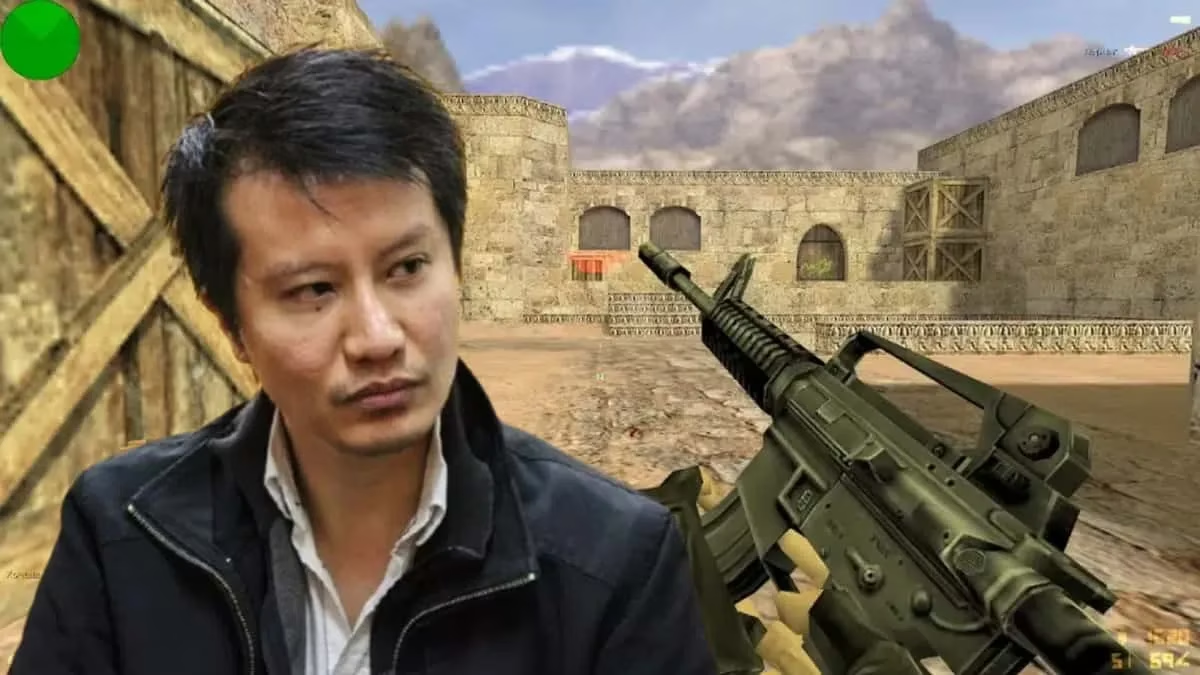
Speaking with YouTuber DeZolance, Le didn't mince words. "The game industry today is way different than what it was 20 years ago," he explained. "It’s just so much more competitive. I mean, you have people making great games, and the market is really, really saturated with a lot of great games." But it's not just the sheer volume of high-quality titles causing headaches. Le pointed a finger at what he calls a deluge of "sh*tty games where people are just trying to make a quick buck." This twin saturation — stellar AAA experiences on one side and cynical, low-effort shovelware on the other — creates a perfect storm where genuine passion projects are often lost in the shuffle.
For Le, this isn't just a minor gripe; it's a real barrier. "It makes it really hard for the good games to get noticed because they have to fight for attention in a sea of all these crappy, quick games that are not really worthy," he lamented. The observation rings particularly true in today's ecosystem, where digital storefronts are crammed to the gills and even masterpieces can vanish without a trace if they miss their moment. The phrase "everyone and their dog is making a game" has never felt more apt, and Le's frustration echoes a sentiment shared by many old-school devs who came up in a less cluttered era.
One key shift that Le highlighted is the monster role marketing now plays. When Counter-Strike — born as a Half-Life mod — started gaining traction around the turn of the millennium, it grew organically, riding on word-of-mouth and community servers. "Back then, marketing was something that I didn’t really spend too much time on. It just happened organically," he recalled. Fast-forward to 2026, and the landscape is a different beast entirely. "These days, yeah, you have to really spend the money on marketing," Le stressed. No matter how brilliant a game is, if nobody knows it exists, it's dead on arrival. For indie teams with shoestring budgets, this represents a colossal hurdle that often feels like chasing a rainbow.
Despite the doom and gloom, Le's outlook isn't entirely cloudy. He pointed to breakout phenomena like PUBG and DayZ as proof that the cream can still rise to the top — if a game offers something genuinely fresh. Both titles started as community-driven mods, much like Counter-Strike itself, before exploding into mainstream juggernauts. "If a game truly offers something interesting, people will notice," he said. "Games like DayZ, they kind of came from the modding community, people just making mods." This serves as a shot in the arm for aspiring creators: a killer hook and authentic, player-first design can still punch through the wall of noise. But it won't happen by accident; the days of uploading a mod to a forum and watching it go viral are largely a thing of the past.
Le was refreshingly self-aware when reflecting on his own journey, admitting that he struck gold with timing. "I feel really lucky to have gotten into the game industry when it was in its early stages," he confessed. "Honestly, I don’t know if I would have succeeded if I tried to redo Counter-Strike today. All I know is it would have been much more difficult because it would just be so competitive." That humility, coming from a man whose creation helped define competitive gaming as we know it, speaks volumes about the daunting barrier to entry in the modern era. In 2026, breaking in requires not just a brilliant idea and technical chops, but a savvy business mind, a fat marketing wallet, and a healthy dose of luck.
For new developers, Le's message is equal parts cautionary tale and rallying cry. The market is a double-edged sword — brimming with opportunity but also teeming with cookie-cutter clones and money-grubbing releases. To stand any chance, indies need to think outside the box, lean on communities, and be prepared to hustle harder than ever just to get a foot in the door. Otherwise, they risk becoming yet another drop in a very crowded bucket.
Leave a Comment