It was a quiet December night in 2024 when Valve pushed a Counter-Strike 2 update that, among other things, silently erased a piece of CS history. For years, pressing the inspect key on the Desert Eagle had a slim chance of triggering a showboating spin around the index finger—an endless, hypnotic flourish that players had grown to cherish. On December 18, that rare animation vanished, replaced only by the standard check. The community instantly noticed, and the outcry was as swift as a flick shot. Fast forward to 2026, and that single "regression" has become a turning point in how Valve treats the fine details of weapon animation, shaping a philosophy that now thrives on unpredictability, player feedback, and a deep respect for what makes CS2 feel alive.
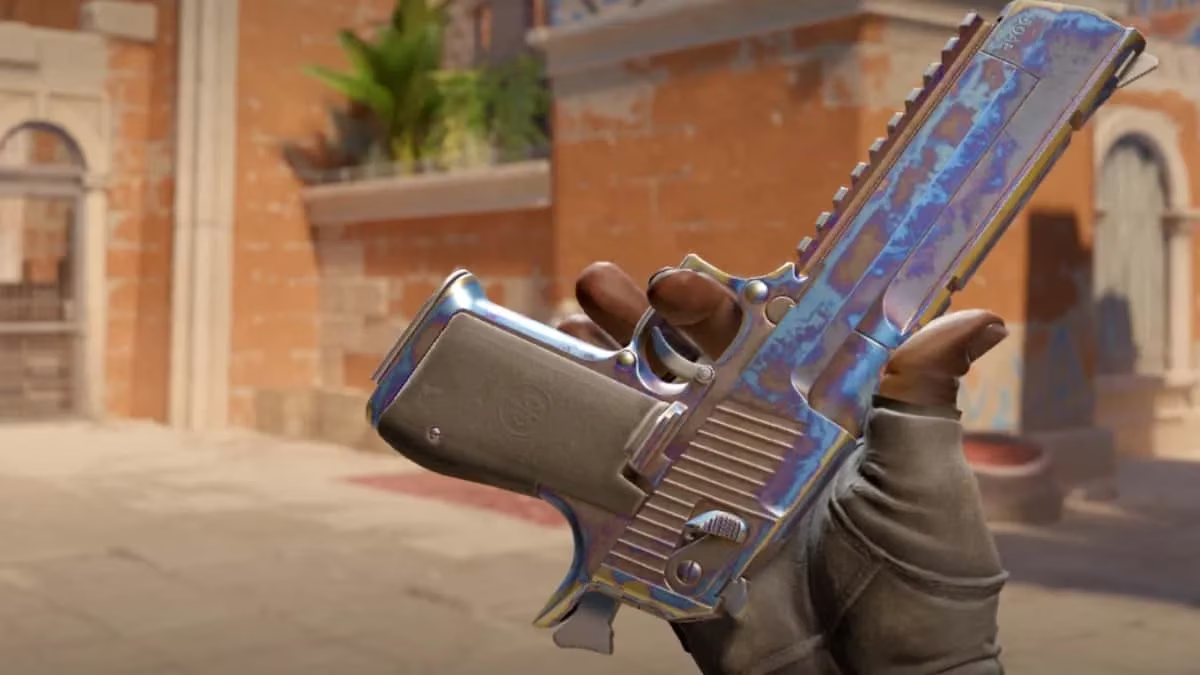
The Great Deagle Disappearance of 2024
Before we explore where we are today, let’s revisit that momentary crisis. The Desert Eagle’s rare inspect wasn’t just any idle motion—it was a meme, a flex, a tradition. Added way back in 2018, the animation let players spin the hand cannon around their finger indefinitely as long as they held the F key. In a game where skins can cost thousands, those seconds of self-indulgence were priceless. When the December 18 patch removed it, players flooded forums with disbelief. "Such an iconic animation," one lamented with a sad-face emoji. Another joked that the game had become "unplayable."
Was it a deliberate removal or just a bug? For a full day, nobody knew. Valve remained silent while speculation ran wild. After all, why would they willingly delete something that had existed for over six years and that fans adored? The answer came on December 20: it was a "regression," a mistake. The studio quickly restored the animation and even used the patch notes to clarify the fix. But the damage—or rather, the lesson—was already broadcast across social media. Valve had learned that tiny details matter enormously, and that transparency about such changes could turn a hiccup into a trust-building moment.
A Community in Uproar, Then Relief
The Deagle incident highlighted a wider truth: CS2 players are obsessed with inspect animations. When you press that key, you aren’t just looking at your skin; you’re performing a ritual. The rare inspect ecosystem includes not only the Deagle but also the balisong-style spins of the Butterfly Knife and the acrobatic Talon Knife. Losing even one of these felt like a betrayal of the game’s soul. In response, Valve did more than just repair the Deagle. They also introduced a brand-new rare inspect for the AK-47—one that immediately split the player base. A popular post at the time called it "goofy," with some players loving the fresh personality while others found it jarringly out of character.
In the same breath, Valve increased the rarity of that new AK-47 animation, acknowledging that its novelty needed to be savored, not spammed. This tweak showed an evolving understanding of how probability and surprise contribute to a weapon’s perceived value. Meanwhile, a long-standing bug with the M9 Bayonet was finally squashed: since the knife’s introduction, the player’s thumb would clip through the handle during the inspect animation. Seeing that fixed was an objective victory that proved Valve could attend to both form and function.
2025: The Year Animation Became Central
Building on the lessons of 2024, Valve dedicated multiple 2025 updates to animation refinement. One major shift was the introduction of inspect animation rarity tiers—common, uncommon, rare—that applied to every weapon. Where previously a rare inspect was a simple 1-in-10 chance, now the system could layer in conditions. For instance, the Deagle’s spin might become more likely after a five-kill streak, while a new MP9 twirl could appear only when a player had full utility. These context-sensitive triggers turned every inspection into a mini-event, rewarding situational awareness.
Why were these changes so well-received? Because they answered a question fans had been asking for years: What if your weapon’s attitude reflected your performance? Valve began calling this concept "dynamic personality," and it quickly became a pillar of CS2’s identity. The AK-47’s "goofy" inspect, once controversial, was reworked in mid-2025 to look sleeker, and its trigger condition was tied to landing consecutive headshots—making it a badge of honour instead of an occasional cringe.
2026: Refining the Art of Inspection
Two years on, and the animation landscape is unrecognisable from that dark December week. Today, every primary weapon boasts at least three inspect animations, with rare variants tied to in-game achievements. The M4A1-S, for example, now has a "silent salute" that plays only when you defuse the bomb without any enemies remaining. The AWP’s rare inspect—a fluid toss-and-catch—unlocks after a collateral kill. These mechanics ensure that rare animations are no longer just random; they are stories.
But the innovation doesn’t stop there. In the summer of 2026, Valve rolled out the Animation Sandbox for map makers and workshop creators. Now, community-designed inspect loops can be submitted and voted on, with the best ones officially incorporated into the game. This has led to an explosion of creativity, from a P250 juggle inspired by real-world gun tricks to a knife spin that pays homage to classic CS 1.6 fragmovies. The workshop guide support—first hinted at in the December 2024 patch—has matured into a full ecosystem that empowers players to shape the game’s aesthetic.
What about the Deagle’s iconic spin? It endures, of course, but now with an added twist: if you hold the inspect key while crouched, the spinning revolver emits a faint blue trail, a nod to the 20th anniversary of CS:GO. Valve’s decision to build on the animation rather than leave it as a relic is a testament to how far the studio has come in embracing player sentiment.
Community Feedback: The Lifeblood of Evolution
Looking back, the 2024 Deagle debacle might have been a tiny footnote in patch history, but it forced a conversation that Valve continues to engage with. Community managers now host quarterly "Animation Roundtables" where players can vote on upcoming inspect concepts. A recent poll asked whether the rare USP-S animation should feature a silencer inspection or a bullet-flip—and why not both? The winning idea will ship later this year. This direct pipeline from player to developer has turned skeptics into evangelists.
Even the "goofy" AK-47 inspect has found its redemption arc. A viral meme format in 2025 used the animation to parody everything from failed clutches to over-the-top esports player introductions, cementing its place in internet culture. Valve, ever attuned to such trends, added a rare follow-up animation in early 2026: after the original spin, the character briefly pretends to use the rifle as a guitar, complete with a silent riff. It’s absurd, yes, but it’s exactly the kind of personality that makes CS2 feel like a living, breathing community.
The Bigger Picture: From Regression to Progression
It’s easy to dismiss inspect animations as mere fluff. After all, they don’t affect damage, recoil, or map strategy. But ask yourself: How many times have you bonded with a weapon simply because it looked cool in your hands? That emotional connection is what drives skin sales, playtime, and the endless pursuit of that perfect clip. Valve’s journey from accidentally deleting a beloved spin to curating a layered system of earned cosmetics shows that the line between gameplay and personality is blurrier than ever—and that’s a good thing.
As we approach the tail end of 2026, rumors are swirling about a possible new knife type with a bespoke set of rare inspects inspired by martial arts. Whether or not that turns out to be true, one thing is certain: the days of taking inspect animations for granted are over. Every flip, twirl, and tap now carries weight, and the community is more involved than ever in deciding what comes next. So the next time you hold down F after a clutch round, take a moment to appreciate that the spin you’re enjoying might exist because someone, somewhere, once refused to let Valve forget that a single animation matters.
And yes, the Deagle still spins indefinitely. Just the way it should.
Leave a Comment