In the bustling lobbies of Call of Duty, few things spark fiercer debate than the feel of movement. When Modern Warfare 2 launched in 2022, it hit a nerve with its cautious, weighty pace—a deliberate pivot that split the player base like a tectonic crack. Yet, by the time Modern Warfare 3 arrived a year later, Sledgehammer Games had already orchestrated a bold reversal, tuning the game’s motion back toward the frenetic energy fans craved. Now, looking back from 2026, it’s clear that this overhaul wasn’t just a fix—it was a masterclass in restoring the series’ pulse.
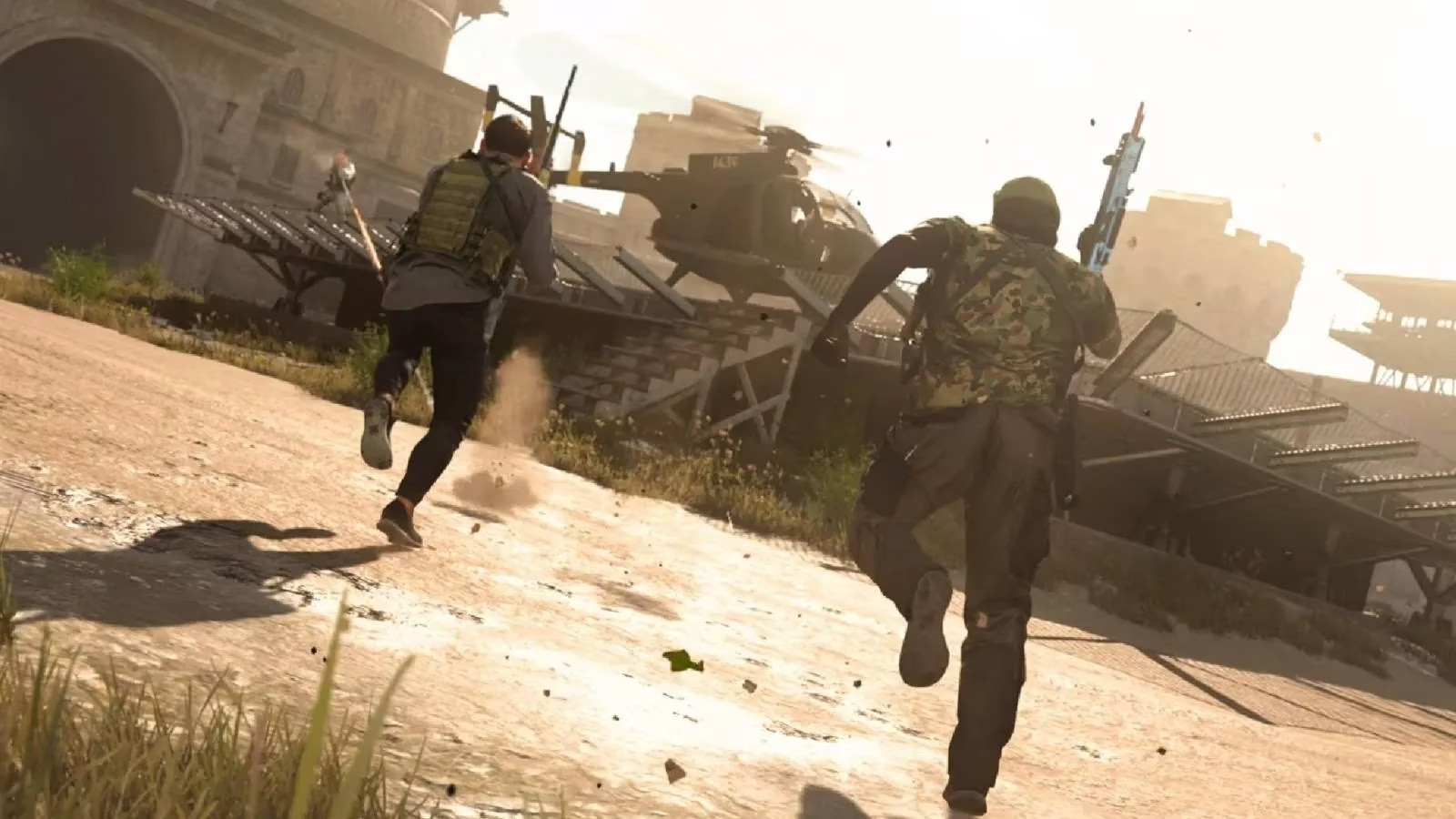
At the heart of MW2 ’s controversy was a stubborn sluggishness. Sprint speeds felt like wading through molasses, mantling over obstacles became a chore, and aiming down sights introduced an almost meditative delay. Longtime fans, accustomed to the balletic chaos of titles like Black Ops 2, found themselves wrestling with a game that seemed to punish speed. The backlash was so intense that Sledgehammer made an unusually direct announcement: Modern Warfare 3 would bring back slide-canceling, reload-canceling, and a general velocity bump. It was as if the developers had swapped a rusty bicycle chain for a freshly oiled one—everything suddenly clicked with a satisfying, frictionless snap.
Slide-canceling’s return was the headline act. This technique, where players interrupt a slide with a jump or sprint to maintain momentum, became the game’s signature rhythm. It’s akin to a jazz drummer dropping unexpected staccato beats—each cancel creates a micro-break in the pattern, keeping both the player and the opponent off-balance in the most exhilarating way. Paired with reload-canceling, which lets you abort a magazine swap to engage instantly, the new movement suite felt like learning to dance after years of forced marching. Players weren’t just traversing maps; they were freestyling through them.
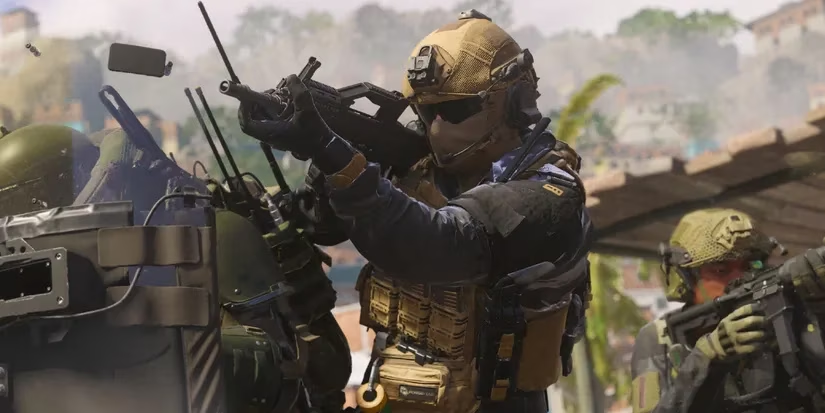
Perhaps the most ingenious addition was the Tac-Stance mechanic—a hybrid state between sprinting and aiming that tightened hip-fire spread without sacrificing mobility. Think of it as a cheetah mid-stride, lowering its posture just enough to sharpen focus while maintaining blistering speed. This feature didn’t just fill a gap; it created a new layer of decision-making. Sliding into Tac-Stance around a corner felt like threading a needle at 60 miles per hour, a micro-skill that separated veterans from casuals. Sledgehammer had taken the core complaint of MW2 —clunky, binary movement—and responded with a system that was as fluid as smoke.
Yet, this overhaul was a double-edged sword, balanced on the knife’s edge of competitive integrity. Bringing back slide-canceling, while celebrated, also risked creating an insurmountable mechanical gap. In the first weeks after launch, lobbies became a showcase of cracked-out athletes performing movement that resembled a caffeinated octopus. For every player who felt liberated, another felt left behind. More critically, the classic MW2 maps the game revived—from Highrise to Terminal—weren’t designed for this breakneck pace. Sightlines that once rewarded patience now became highways for unpredictable slides. The nostalgia trip often veered into a demolition derby, and many yearned for the map design to match the speed, or vice versa.
Sledgehammer mitigated some of this with thoughtful tuning. Tac-Stance’s bullet-spread reduction was finely calibrated, so it rewarded aggression without making full ADS obsolete. Slide-canceling had a slight stamina penalty to prevent infinite loops. By mid-2024, the meta had settled into a comfortable—if sweaty—groove. What emerged was a game that honored both the twitch reflex demands of classic arcade shooters and the tactical nuance modern entries insisted upon. It wasn’t a perfect marriage, but it gave the franchise a new metabolic rate.
From the vantage point of 2026, Modern Warfare 3’s movement philosophy has become the series’ new baseline. Subsequent titles have iterated on the Tac-Stance and slide mechanics rather than abandon them. The experiment proved that a community’s muscle memory matters—and that sometimes, the best way forward is to unshackle players from realism’s anchor. Like a racing simulator that suddenly unleashes its torque, MW3 reminded everyone that Call of Duty’s soul lives not in the sights, but in the sprint.
Leave a Comment