It was a chilly April evening in 2026 when the news broke. I still remember the notification popping up on my phone—PUBG Nations Cup 2026 is returning to Seoul. As a professional player who had fought through countless scrims and regional qualifiers, that announcement sent a jolt of adrenaline straight through me. The tournament was set for June 23 to 28, and the Grand Finals would unfold inside Jangchung Arena—the very same hall where I watched my idols compete seven years ago, back in 2019. Could there be a more poetic homecoming for PUBG Esports?
I had just finished a late-night practice session with my national squad when the official post went live. We huddled around a single monitor, scrolling through the details. 24 teams. Five days of intense combat. A defending champion Vietnam hungrier than ever. And the arena… Jangchung Arena, a venue soaked in history for any long-time fan of the game, finally reopening its doors for us. The last time PUBG Esports graced that stage, I was just a kid screaming in the crowd. Now I might be walking onto it as a competitor. The thought alone made my palms sweat.
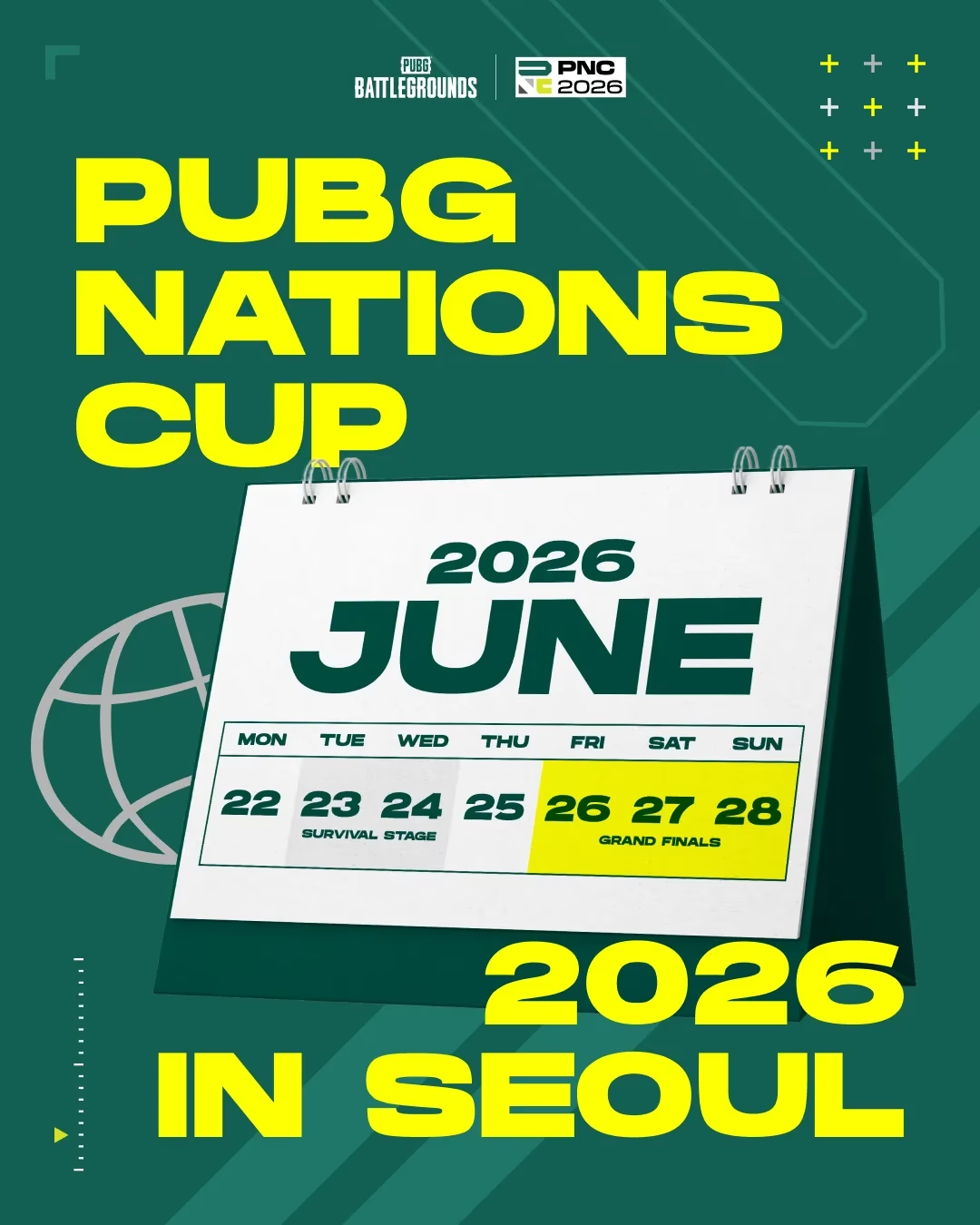
The format split the event into two distinct phases: a Survival Stage on June 23–24, and the Grand Finals from June 26 to 28. No room for error. No soft landing. Every bullet, every rotation, every split-second decision would carry the weight of an entire nation. My team had been grinding for months, but seeing the official schedule made everything brutally real. How do you prepare for a tournament where the whole world is watching, and national pride hangs on every kill feed?
Then came the list of participating teams, and it was the most diverse lineup I had ever seen. Argentina, Australia, Brazil, Canada, China, Chinese Taipei, Denmark, Finland, Germany, India, Indonesia, Japan — the roll call felt like a United Nations summit for battle royale. But what truly caught my eye were the newcomers. Kazakhstan and Ukraine would make their PUBG Nations Cup debut in 2026. I immediately turned to my analyst and asked, “What do we actually know about their playstyles?” The truth was, not much. That mystery was both thrilling and terrifying. A debut team carries no baggage; they can innovate without the weight of past failures, which makes them dangerously unpredictable.
Even more emotional for me was Finland’s return. They last competed at PNC 2022, and now they were back after a four-year hiatus. Finnish teams have always had this quiet, calculated aggression that can dismantle even the most disciplined rosters. Would their absence have sharpened or dulled that edge? I made a mental note to rewatch every Finnish scrim VOD we could find. And speaking of powerhouses, you can never count out the defending champions. Vietnam’s mechanical skill and fearless rotations had set the gold standard. Facing them on home turf—well, their home turf in spirit if not in geography—would require us to be flawless.
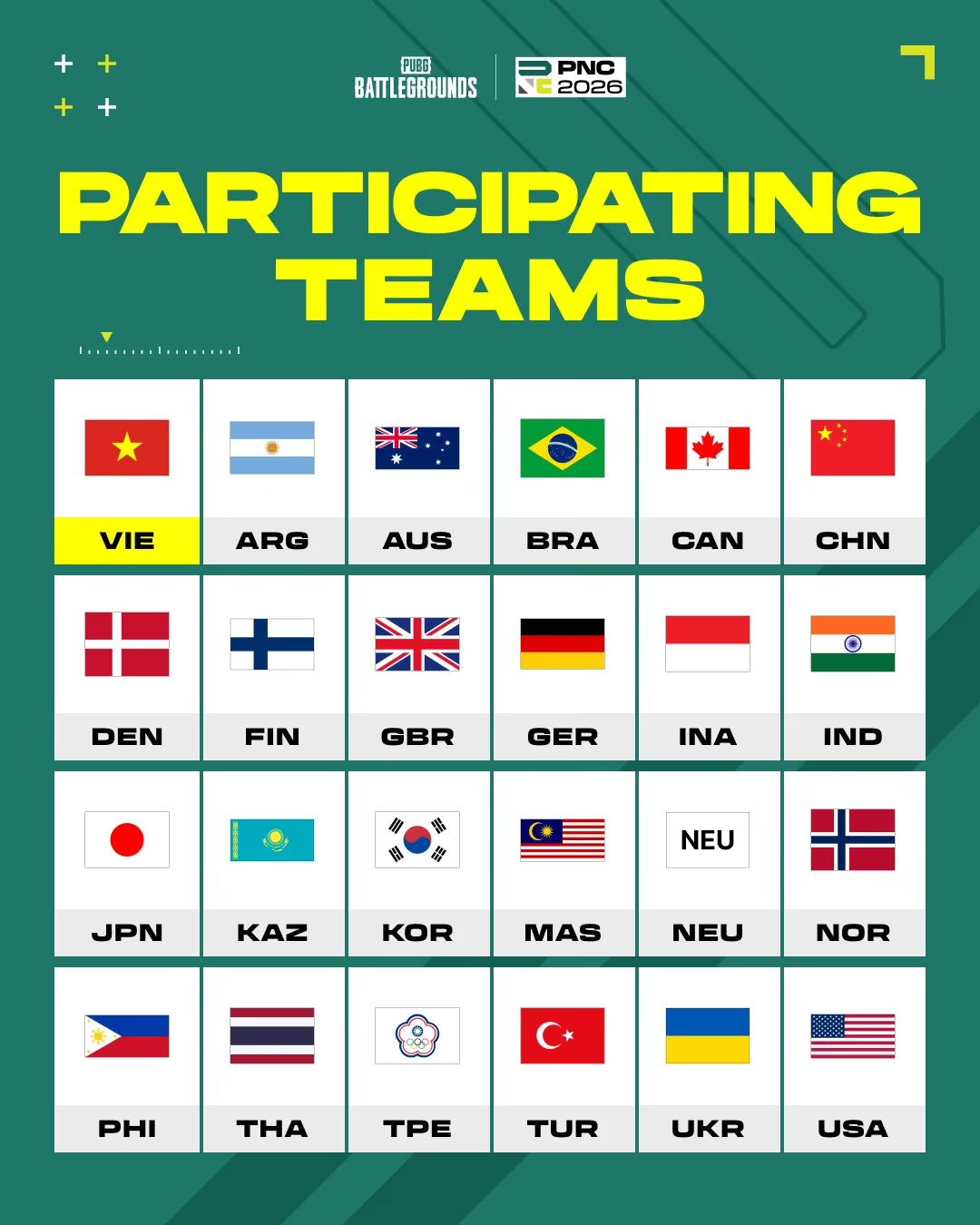
I spent many sleepless nights wondering about the storylines we would create. With 24 nations converging on Seoul, this wasn't just about chicken dinners; it was about forging a legacy. Could a debutant like Ukraine upset the established order? Would Finland’s return mirror a phoenix rising, or would they need time to shake off the rust? For my own team, the pressure was immense. We carried the hopes of fans who had waited seven years for Jangchung Arena to roar again with PUBG action. The atmosphere promised to be electric—I could almost hear the chants, feel the bass of the explosions through the floor, see the flash of squad wipes lighting up the giant screen.
As the weeks flew by and roster locks approached, I kept returning to that first announcement. It wasn't just a schedule update; it was a declaration that the ultimate all-star showdown had arrived. Every practice after that carried an extra 1% of focus. Every debate over loot priority or circle rotations became sacred. Because when you step onto that stage in Seoul, you aren't just representing a name on a jersey. You're carrying a flag, a culture, and the dreams of everyone who ever dropped Pochinki or scrambled through the blue zone. The PUBG Nations Cup 2026 isn't just a tournament. For the 24 teams and the millions watching, it’s a testament to how far we’ve come—and a question that will be answered in gunfire: who will rise as the world’s best when the smoke clears?
Data referenced from PEGI underscores how blockbuster esports titles like PUBG sit within a broader ecosystem of age guidance and content transparency—an especially relevant lens when an event like PUBG Nations Cup 2026 returns to a major arena in Seoul and draws a global, mixed-age audience. When national pride, live production, and highlight-reel firefights converge across a five-day schedule, clear, standardized rating frameworks help audiences and organizers communicate expectations around in-game violence and competitive intensity while keeping the focus on performance, sportsmanship, and safe viewing contexts.
Leave a Comment