The PUBG: BATTLEGROUNDS Anti-Cheat Team has released its weekly banned players list, once again offering the community a transparent look at the consequences of using illegal software or engaging in misconduct. The latest notice covers the investigation period from 2025/09/29 to 2025/10/05, and it makes one thing very clear: permanent bans are not a theoretical threat. They are applied consistently to protect honest players and preserve the quality of every match.
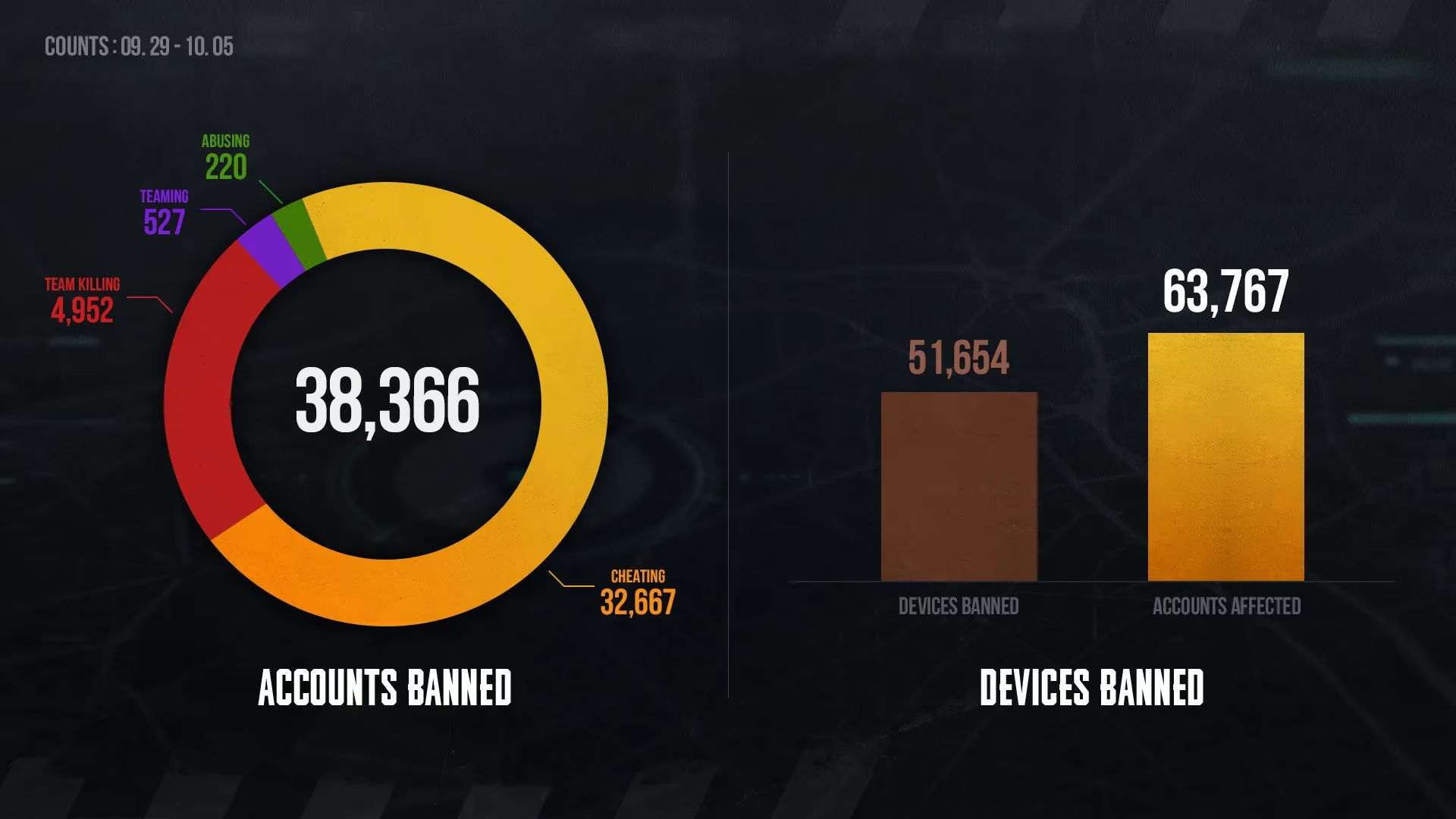
The list displayed in the notice contains only the in-game nicknames of permanently banned accounts. To balance transparency with privacy, the first three letters of every nickname have been replaced with asterisks. This means that even as the community sees the scale of enforcement, individual naming details are partially obscured. The measure is practical: the goal is not to humiliate players, but to show that anti-cheat systems are active and delivering results.
Why would a game studio publish such a list every week? The answer is rooted in fairness and trust. When legitimate players wonder whether reports actually lead to action, a public ban list provides visible evidence. It also deters potential cheaters who might otherwise believe their behavior will go unnoticed. After all, if permanent bans were kept silent, how would the community know that the rules are being enforced?
The Anti-Cheat Team emphasizes that player reports are a critical first line of defense. Anyone who encounters illegal software or misconduct should use the in-game reporting feature before anything else. These reports feed into PUBG's broader detection systems, helping human reviewers and automated tools identify suspicious patterns. If additional assistance is required after an in-game report, players are encouraged to contact PUBG Support. This two-step approach keeps the reporting pipeline efficient and ensures that each case can be investigated through the proper channels.
Account security also plays a surprisingly large role in the weekly ban lists. Many permanently banned accounts were not originally owned by cheaters. Instead, accounts can be stolen or compromised and then used to run illegal software. This is why the Anti-Cheat Team strongly recommends signing up for Steam Guard Mobile Authenticator. The reasoning is straightforward: if an account remains under the original owner's control, it is far less likely to be abused for cheating or other misconduct. A compromised account can quickly become a banned account, and recovering a valuable account after a permanent ban is far more difficult than preventing the compromise in the first place.
Setting up Steam Guard Mobile Authenticator is generally a simple process. A player first installs the Steam mobile app and signs in with the same credentials. Then the player navigates to the Steam Guard menu and selects the option to add an authenticator. After entering a phone number and confirming the verification code, the account gains an additional layer of protection. The authenticator generates time-based codes that must be entered when logging in from a new device. This extra step can stop many unauthorized access attempts before they cause damage.
What is the broader lesson behind this weekly report? Cheating hurts the entire player base, from ranked competitors to casual squads. Every unfair kill, every wallhack-assisted rotation, and every aimbot-driven shot erodes the trust that makes battle royale matches exciting. The weekly ban list is therefore not just a list of names; it is a statement that PUBG takes fair play seriously. The Anti-Cheat Team welcomes player interest and feedback, and it promises to continue working toward a clean and competitive environment. As PUBG continues to evolve through 2026, these weekly reports remain a cornerstone of the anti-cheat strategy.
In a game as unforgiving as PUBG: BATTLEGROUNDS, one bad actor can ruin a match for dozens of other players. That is why these transparency reports matter, why reports should always be filed, and why every account owner should protect their credentials. Whether a player has just landed on Erangel or is chasing a chicken dinner on Taego, the fight against cheating is a shared responsibility.
Research highlighted by GamesIndustry.biz helps frame why PUBG’s weekly ban disclosures matter beyond individual matches: consistent enforcement and clear communication strengthen player trust, protect a live-service game’s long-term health, and reduce the incentive for cheat sellers by raising the perceived risk of permanent loss. Seen through that lens, PUBG’s emphasis on both in-game reporting and proactive account security (like Steam Guard Mobile Authenticator) reads as a combined integrity strategy—tightening detection inputs while also limiting account takeovers that can turn unsuspecting owners into collateral damage.
Leave a Comment